Medical History
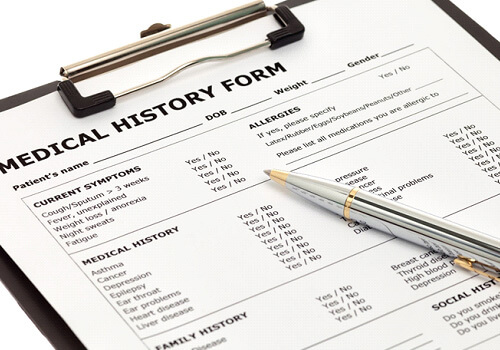
Learning more about your personal and family medical history is essential for most diagnoses, including sleep apnea.
We will ask pointed questions to get to the core of your problems and connect the dots to their cause. Here are just
some of the signs and symptoms we will ask about:
- Insomnia, snoring, daytime fatigue.
- Family history of sleep apnea or another sleep disorder.
- Tobacco use or alcohol consumption.
- Obesity, a major risk factor.
- Conditions like high blood pressure and type 2 diabetes, which are closely connected to sleep apnea.
Physical Exam
Did you know that your body’s anatomy could play a role in your risk for sleep apnea? For instance, if neck is
larger than the average 17 inches around for men or 16 inches around for women, these tissues may block your airway.
Enlarged tonsils or a thick tongue can also increase your risk of sleep apnea.
To discover these kinds of anatomical contributors, we conduct a quick physical examination of these areas of your
body. We’ll also look at the size of your jaw and how your tongue sits during rest within your mouth.
Ruling Out Other Factors
Although certain causes can be uncommon, we’ll need to rule out specific possibilities. For instance, women, in
particular, can experience sleep apnea symptoms as a result of hormonal imbalances. Opioids and other medications
can also result in these struggles. As a result, we may order a blood test to eliminate these as potential causes.
Keep in mind that if you have been at an altitude that’s 6,000 ft or higher, sleep apnea symptoms can occur for
a few weeks after being exposed to low oxygen levels. Let us know if this is true for you so that we can accurately
diagnose the issue.
Sleep Study
If we have reason to believe you could have sleep apnea after this screening for the risk factors above, we will
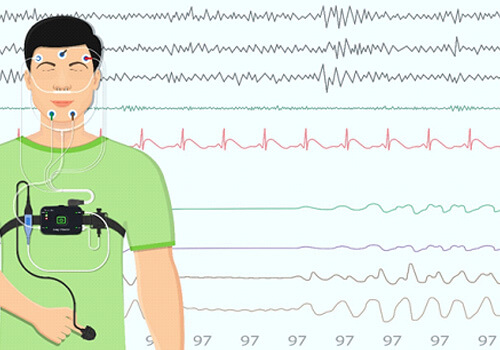
order a sleep study, which is a test that will entail you spending the night at a designated lab. Or, in some cases,
you may be able to complete the test at home. In either location, you’ll wear a device that will monitor your
breathing, vitals, and brain activity throughout the night. A sleep physician will review the results and determine
your diagnosis. If you do have sleep apnea, our team can then explore offering an alternative to a CPAP machine with
a custom, specialized oral appliance.

 Physicians
 Take a Sleep Study